
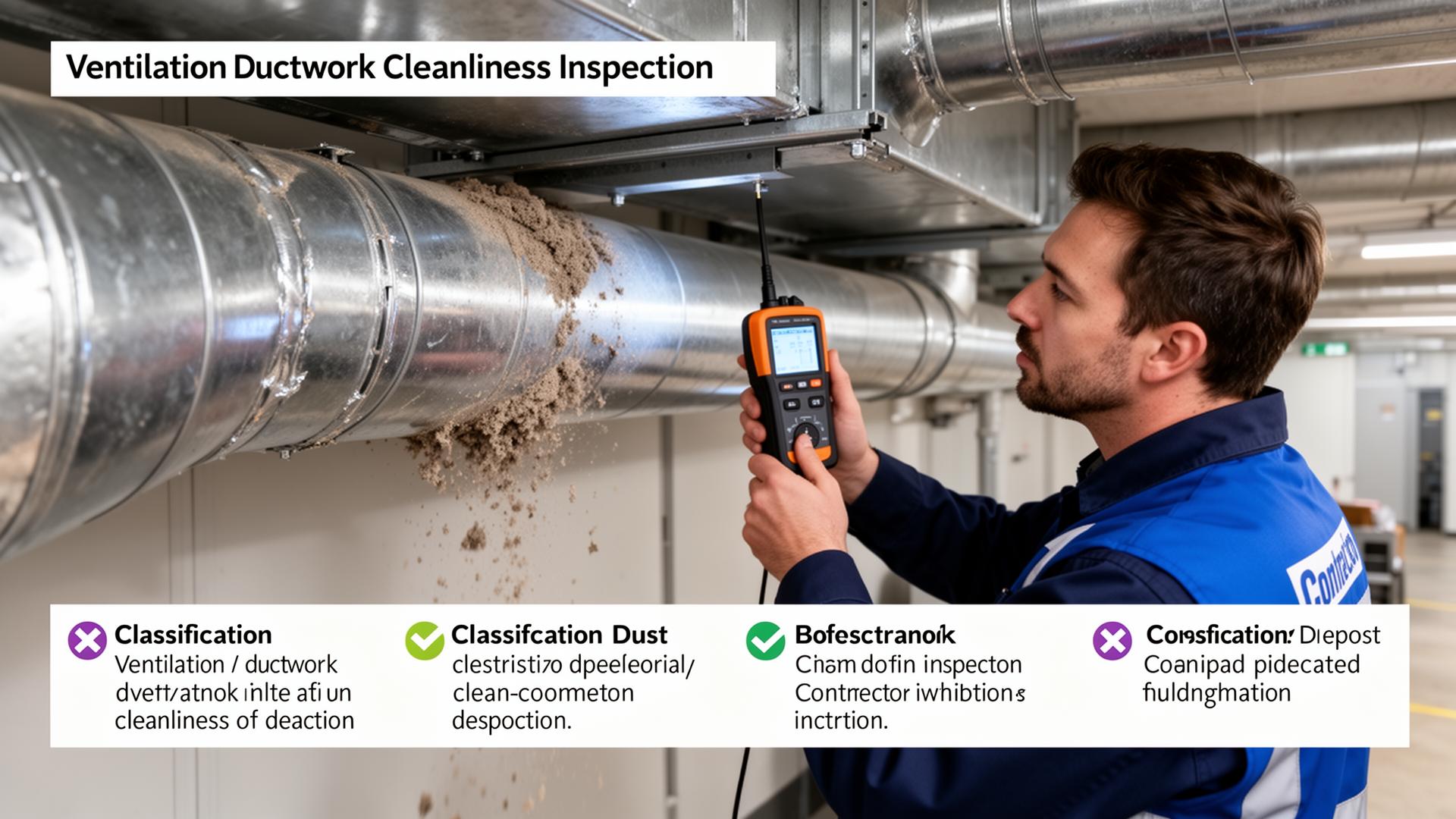
The cleanliness classification system is at the heart of BS EN 15780. It is the method by which ventilation cleaning contractors assess, record, and certify the condition of ductwork before and after cleaning work.
Understanding how to correctly apply the four cleanliness classes — and how to document your findings zone by zone — is essential for producing accurate, defensible certificates that your clients can rely on for compliance purposes.
This guide walks through the classification system in detail, explains how to conduct pre and post clean assessments properly, and covers the common mistakes that contractors make when applying the standard.
The Four Cleanliness Classes Explained
BS EN 15780 defines four cleanliness levels for ventilation ductwork. Each class represents a distinct condition that contractors must be able to identify consistently during inspections.
Class 1 — Clean
The ductwork interior surfaces are visually clean. There is no significant accumulation of dust, debris, or contamination. Minor surface discolouration from age or normal wear is acceptable, but there should be no loose particulate matter that could become airborne during system operation.
This is the target classification after professional cleaning. If you cannot achieve Class 1 in a particular zone, you should document the reason and flag it for remedial attention.
Class 2 — Slightly Contaminated
Thin dust deposits are visible on internal surfaces. The contamination is light and uniform, typically the result of normal system operation over a moderate period. There is no biological growth, no significant debris, and no substances that would materially affect air quality.
Class 2 is a common pre-clean finding in systems that have been cleaned within their recommended interval but have accumulated some surface dust. It is also an acceptable post-clean classification in areas where access limitations prevent thorough cleaning.
Class 3 — Contaminated
Significant dust accumulation is present. The deposits are thick enough to be disturbed by airflow, potentially affecting indoor air quality. There may be localised debris, dead insects, construction dust, or early signs of biological contamination.
Class 3 findings typically indicate that the system has exceeded its recommended cleaning interval or that specific areas have been neglected. Professional cleaning is required.
Class 4 — Heavily Contaminated
Severe contamination is present. This may include thick dust deposits, biological growth (mould, bacteria), significant debris, water damage staining, or substances that pose a direct health risk. The system requires immediate professional cleaning and potentially remedial work to the ductwork itself.
Class 4 findings should be documented thoroughly with photographs. In some cases, the building owner may need to take the system offline until cleaning is completed.
Conducting a Pre-Clean Assessment
The pre-clean assessment establishes the baseline condition of the ventilation system before any cleaning work begins. This is a critical step that many contractors rush or skip entirely — which undermines the credibility of their certificates.
A proper pre-clean assessment involves:
Dividing the system into zones. Each zone should represent a logical section of the ventilation system — typically by floor, by room served, or by system branch. The number of zones depends on the size and complexity of the system, but you should have enough zones to provide meaningful coverage.
Inspecting each zone individually. Use appropriate lighting (a torch is essential) and access the ductwork interior through access panels, inspection hatches, or removable sections. Assess the condition of the internal surfaces, noting dust levels, debris, biological contamination, and any damage.
Assigning a cleanliness class. Based on your visual inspection, assign a cleanliness class (1–4) to each zone. Be consistent and honest — the pre-clean classification should accurately reflect what you found.
Recording findings. Document your findings for each zone. Good practice includes noting the location, the classification, any specific observations (e.g., "construction dust present", "light mould growth on insulation"), and supporting photographs where appropriate.
Conducting a Post-Clean Assessment
After cleaning work is completed, you re-inspect each zone and assign a new cleanliness classification. The post-clean assessment demonstrates the effectiveness of your cleaning work and forms the basis of the compliance certificate.
For a certificate to show the system as compliant, the majority of zones should achieve Class 1 (Clean) post-cleaning. If any zones cannot achieve Class 1, this should be documented with an explanation.
Common reasons for zones not achieving Class 1 include:
- Access limitations preventing thorough cleaning
- Staining or discolouration that cannot be removed without damaging the ductwork
- Areas requiring specialist treatment (e.g., antimicrobial application)
- Structural damage to ductwork that requires repair before cleaning
In these cases, the zone should be flagged as requiring remedial attention, and your certificate should recommend follow-up action.
Zone-by-Zone Documentation
The strength of a BS EN 15780 certificate lies in its zone-by-zone detail. Unlike a simple pass/fail statement, the classification system provides a granular picture of the system condition.
For each zone, your certificate should show:
- Zone identifier (e.g., "Floor 2 — Main Supply", "Kitchen Riser — Extract")
- Pre-clean classification (1–4)
- Post-clean classification (1–4)
- Cleaning method used
- Any notes or observations
This level of detail gives building owners and facilities managers confidence that the entire system has been inspected and cleaned, not just the easily accessible sections.
Common Mistakes Contractors Make
Skipping the pre-clean assessment. Without a baseline, your certificate has no context. Always document the pre-clean condition, even if it adds 15 minutes to the job.
Using too few zones. A five-storey building with one zone for the entire system does not provide meaningful data. Break the system down into logical sections.
Inconsistent classification. Make sure your team applies the classifications consistently. What one operative calls Class 2, another should also call Class 2. Brief your team on the definitions before every job.
Failing to document exceptions. If a zone cannot achieve Class 1, explain why. This protects you professionally and gives the client actionable information.
Not recommending a next inspection date. Every BS EN 15780 certificate should include a recommended reinspection interval. This drives your renewal pipeline and demonstrates professionalism.
Using TR19Flow for BS EN 15780 Assessments
TR19Flow makes BS EN 15780 assessments straightforward. The ventilation survey form guides you through each step — building details, system information, zone-by-zone pre and post clean classifications, cleaning methods, and compliance assessment.
You complete the survey on your phone while on site. The system automatically generates a branded PDF certificate, emails it to your client, and adds the recommended reinspection date to your renewal dashboard.
No Word templates, no evening admin, no missed reinspections.