
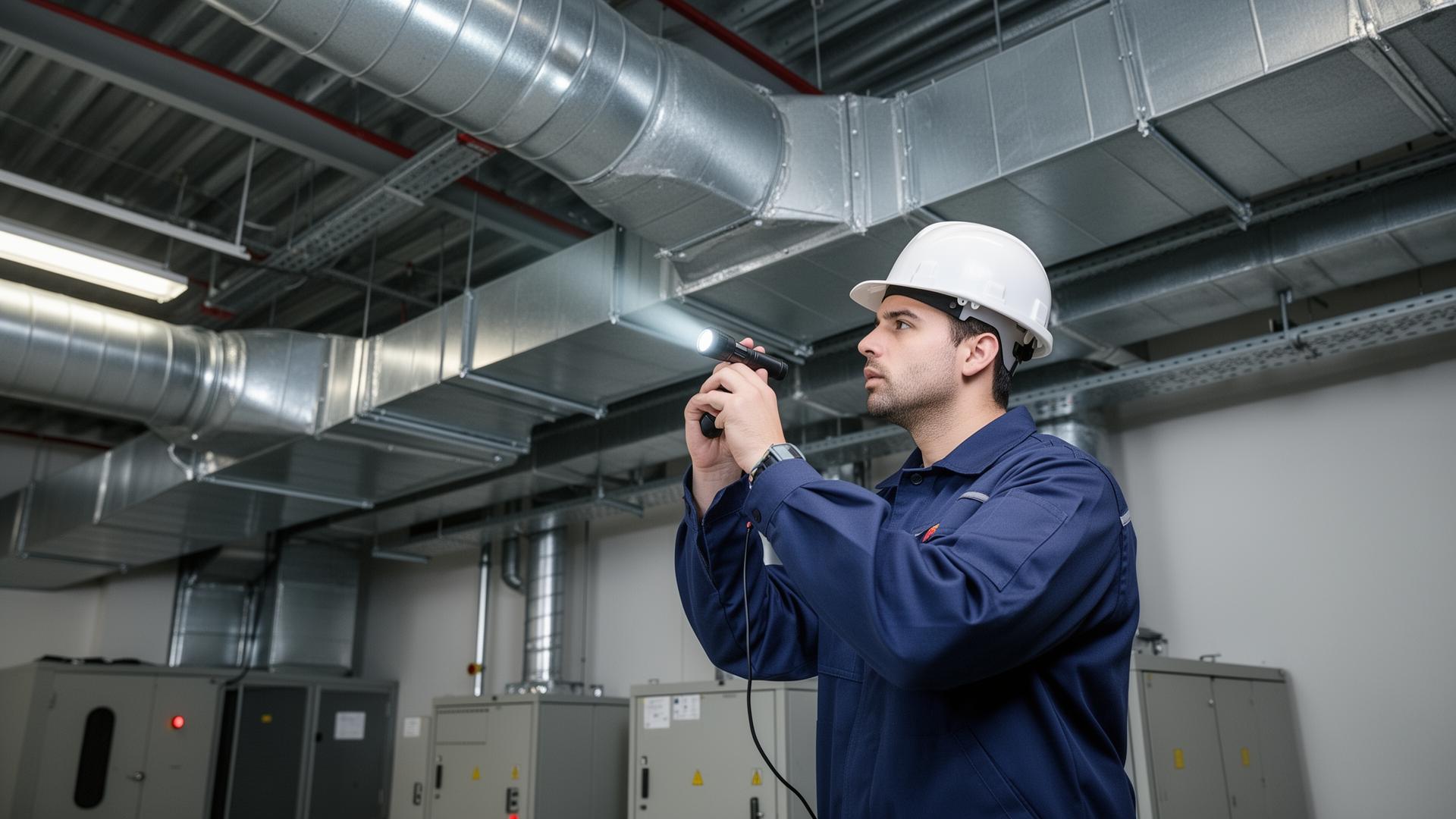
If you clean ventilation and ductwork systems in the UK — whether in offices, hospitals, schools, retail units, or industrial buildings — then BS EN 15780 is one of the most important standards you need to understand.
Unlike TR19, which deals specifically with kitchen extract grease, BS EN 15780 covers the cleanliness of general ventilation systems. It is the European standard that defines how to assess, classify, and certify the cleanliness of ductwork before and after cleaning.
This guide explains what BS EN 15780 is, who it applies to, what the cleanliness classifications mean, and how to generate compliant certificates efficiently.
What Is BS EN 15780?
BS EN 15780 is a European standard titled Ventilation for buildings — Ductwork — Cleanliness of ventilation systems. It was adopted by BSI (British Standards Institution) and applies across the UK and Europe.
The standard provides a framework for:
- Assessing the cleanliness of ventilation ductwork
- Classifying cleanliness levels before and after cleaning
- Defining inspection methods and acceptance criteria
- Documenting results in a formal compliance certificate
It applies to all types of ventilation ductwork that are not covered by TR19 — essentially everything outside kitchen extract grease systems.
Who Needs BS EN 15780 Certificates?
Any contractor cleaning general ventilation systems should be producing BS EN 15780 certificates for their clients. The standard is particularly relevant for:
Building owners and facilities managers who need documented proof that their ventilation systems have been professionally cleaned and inspected. This is increasingly required for insurance, health and safety compliance, and building management accreditations.
Healthcare facilities where indoor air quality directly impacts patient safety. Hospitals, clinics, and care homes often require formal cleanliness certification as part of their infection control protocols.
Educational institutions including schools and universities where duty of care obligations require demonstrable air quality management.
Commercial offices and retail spaces where HVAC systems serve large numbers of occupants and landlords require cleaning documentation for tenant handovers or lease compliance.
The Four Cleanliness Classifications
BS EN 15780 uses a four-level classification system to rate the cleanliness of ventilation ductwork:
Class 1 — Clean. The ductwork interior is visually clean with no significant dust, debris, or contamination. This is the target state after professional cleaning.
Class 2 — Slightly contaminated. Minor dust deposits are present but within acceptable limits. The system may be operational but should be scheduled for cleaning.
Class 3 — Contaminated. Significant dust accumulation, debris, or biological contamination is present. The system requires professional cleaning before it can be considered compliant.
Class 4 — Heavily contaminated. Severe contamination that may include biological growth, significant debris, or substances that could affect air quality or system performance. Immediate cleaning is required.
During a BS EN 15780 inspection, the contractor assesses multiple zones within the ventilation system and assigns a cleanliness class to each zone both before and after cleaning. This zone-by-zone approach provides a detailed picture of the system condition and demonstrates the effectiveness of the cleaning work.
How Is a BS EN 15780 Inspection Conducted?
A proper BS EN 15780 inspection follows a structured process:
Pre-clean assessment. Before any cleaning work begins, the contractor inspects each accessible zone of the ventilation system and records the current cleanliness classification. This establishes the baseline condition and documents the extent of contamination.
Zone identification. The ventilation system is divided into logical zones — typically by floor, area, or system section. Each zone is inspected and classified independently.
Visual inspection. The primary assessment method is visual inspection using appropriate lighting and access equipment. The contractor examines the internal surfaces of ductwork, plenums, dampers, and associated components.
Cleaning work. Professional cleaning is carried out using appropriate methods for the duct type and contamination level.
Post-clean assessment. After cleaning, each zone is re-inspected and re-classified. The post-clean classification should show a measurable improvement, with most zones achieving Class 1 (Clean).
Documentation. All findings are recorded in a formal certificate that includes building details, system information, zone-by-zone classifications, cleaning methods used, and a compliance assessment.
What Should a BS EN 15780 Certificate Include?
A compliant BS EN 15780 certificate should contain:
- Building name, address, and system identification
- Date of inspection and cleaning
- Contractor details and operative names
- Zone-by-zone pre-clean and post-clean cleanliness classifications
- Cleaning methods used for each zone
- Overall compliance assessment (Compliant or Remedial Works Required)
- Recommended next inspection date and interval
- Contractor signature and declaration
The certificate serves as formal evidence that the ventilation system has been professionally assessed and cleaned to a recognised European standard.
BS EN 15780 vs TR19 — What Is the Difference?
This is one of the most common questions from ventilation cleaning contractors, and the answer is straightforward.
TR19 is a BESA (Building Engineering Services Association) standard that deals exclusively with kitchen extract cleaning — specifically the removal of grease deposits from kitchen canopies, ductwork, and extraction systems. TR19 certificates include grease thickness measurements (micron readings), grease ratings, and specific BESA compliance statements.
BS EN 15780 covers everything else — general ventilation, HVAC, supply and extract air systems, and any ductwork that is not part of a kitchen extract system.
Many contractors work across both standards. If you clean kitchen extracts AND general ventilation systems, you need to produce both TR19 and BS EN 15780 certificates for the appropriate systems.
Generating BS EN 15780 Certificates with TR19Flow
TR19Flow includes a dedicated BS EN 15780 survey and certificate generator alongside its TR19 and Kitchen Hygiene certificate tools.
The process is simple:
- Create the job and select BS EN 15780 as the certificate type
- Complete the ventilation survey on your phone — building details, system information, and zone-by-zone pre and post clean classifications
- Select cleaning methods and add any notes
- The certificate generates automatically as a branded PDF
- It is emailed to your client and stored in their portal
The system also calculates the next inspection date based on the recommended interval you select, and feeds it into your renewal dashboard so you never miss a reinspection.
All three certificate types — TR19, Kitchen Hygiene, and BS EN 15780 — are available on every TR19Flow plan, including Solo at £49 per month.
Summary
BS EN 15780 is the standard that governs ventilation ductwork cleanliness for all non-kitchen-extract systems. If you clean office ventilation, hospital HVAC, school ductwork, or any general ventilation system, you should be producing BS EN 15780 certificates for your clients.
The standard uses a four-level classification system, requires zone-by-zone assessment, and results in a formal compliance certificate. Combined with TR19 for kitchen extract and kitchen hygiene certificates for deep cleans, contractors can now cover all their compliance documentation from a single platform.