
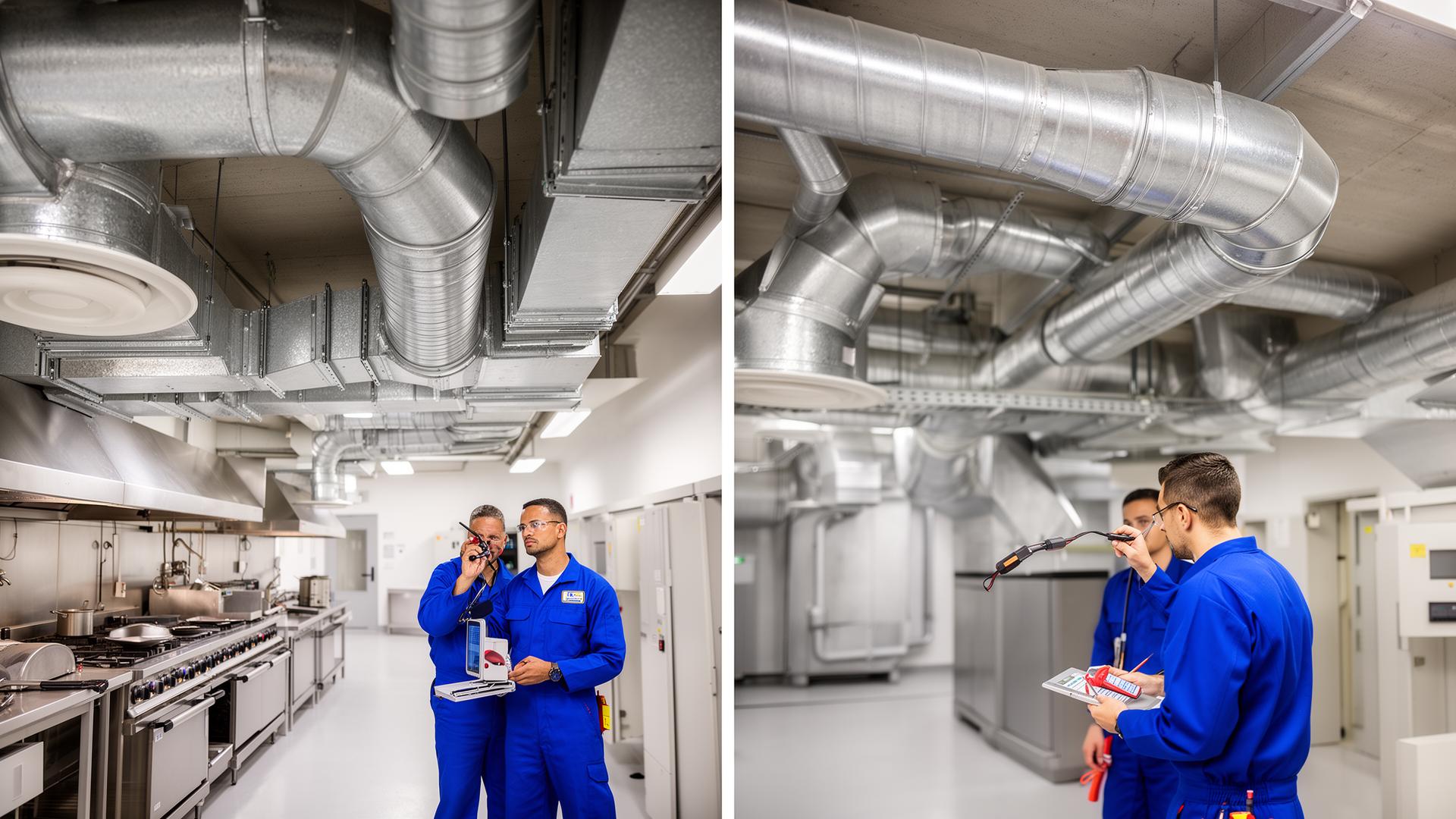
If you work in ventilation hygiene and ductwork cleaning, you have probably encountered both TR19 and BS EN 15780. Both are cleaning standards. Both result in compliance certificates. And both are important for different types of work.
But they are not interchangeable, and using the wrong standard for the wrong system is a mistake that can undermine your credibility with clients, insurers, and building managers.
This guide explains the differences between TR19 and BS EN 15780, clarifies which standard applies to which type of work, and helps you understand when you need one, the other, or both.
TR19 — Kitchen Extract Grease Cleaning
TR19 is published by BESA (Building Engineering Services Association) and is formally titled TR19® Grease — Internal cleanliness of ventilation systems involved in the extraction or removal of cooking fumes.
The key word is grease. TR19 applies exclusively to ventilation systems that extract cooking fumes and accumulate grease deposits. This includes:
- Kitchen canopy hoods
- Grease extract ductwork
- Extract fans and fan housings
- Grease filters and filter frames
- Any ductwork connecting kitchen extract systems
TR19 certificates include specific measurements that are unique to grease contamination:
Dry film thickness (DFT) readings measured in microns using a calibrated gauge. These readings quantify the thickness of grease deposits on internal duct surfaces before and after cleaning.
Grease ratings that classify the severity of grease contamination.
BESA compliance statements confirming that the post-clean condition meets the standards specified in the TR19 Grease specification.
TR19 is the standard that VHR (Ventilation Hygiene Register) registered contractors use for kitchen extract cleaning work. If you are cleaning a kitchen extraction system, TR19 is the correct standard.
BS EN 15780 — General Ventilation Cleanliness
BS EN 15780 is a European standard that covers the cleanliness of ventilation systems that are NOT kitchen extract grease systems. It applies to:
- Office HVAC supply and extract systems
- Hospital and healthcare ventilation
- School and university ventilation
- Retail and commercial building HVAC
- Industrial ventilation (non-LEV)
- Residential communal ventilation systems
- Any ductwork that does not carry cooking fume grease
BS EN 15780 uses a four-level cleanliness classification system (Class 1 through 4) and requires zone-by-zone inspection before and after cleaning. It does not measure grease thickness — instead, it assesses general cleanliness including dust, debris, biological contamination, and overall duct condition.
The standard results in a cleanliness certificate that documents the building, system, inspection zones, pre and post clean classifications, and a compliance assessment.
When Do You Need Both?
Many commercial buildings have both kitchen extract systems and general ventilation systems. A hotel, for example, might have:
- Kitchen canopy and extract ductwork serving the restaurant kitchen → TR19
- General HVAC supply and extract serving guest rooms, lobbies, and conference areas → BS EN 15780
- Back-of-house ventilation for laundry, plant rooms, and storage → BS EN 15780
If you are contracted to clean the entire building's ventilation, you would produce TR19 certificates for the kitchen extract system and BS EN 15780 certificates for everything else.
This is increasingly common as facilities managers consolidate their ventilation maintenance contracts with a single provider. Contractors who can deliver both certificate types have a significant competitive advantage.
The Commercial Opportunity
Understanding both standards opens up significant additional revenue for ventilation cleaning contractors.
If you currently only do kitchen extract (TR19) work, adding BS EN 15780 ventilation cleaning to your services means you can:
- Offer a complete ventilation compliance service to existing clients
- Win contracts from facilities management companies who need both standards covered
- Service buildings that have no kitchen extract but still need ventilation cleaning
- Increase the value of every site visit by covering all ventilation systems
Conversely, if you primarily do general ventilation work and hold BS EN 15780 certificates, adding TR19 kitchen extract cleaning expands your addressable market to include restaurants, hotels, care homes, and any premises with commercial kitchens.
What About Kitchen Hygiene Certificates?
There is a third type of compliance document that sits alongside TR19 and BS EN 15780 — the Kitchen Hygiene Certificate.
This applies to commercial kitchen deep cleaning work that does not involve ductwork. It covers the cleaning of kitchen surfaces, equipment, floors, walls, and canopy exteriors. Kitchen hygiene certificates are used by commercial kitchen cleaning contractors to provide documented proof of professional cleaning for environmental health compliance and food safety audits.
Kitchen hygiene certificates do not replace TR19 (which covers duct interiors) or BS EN 15780 (which covers general ventilation), but they complement both by covering the kitchen environment itself.
Choosing the Right Standard — Quick Reference
Kitchen canopy, grease ductwork, extract fans → TR19
Office ventilation, hospital HVAC, school ductwork → BS EN 15780
Commercial kitchen surfaces, equipment, floors → Kitchen Hygiene Certificate
Building with kitchen extract AND general ventilation → Both TR19 and BS EN 15780
Producing Both Certificate Types with TR19Flow
TR19Flow is designed for contractors who work across all three standards. When you create a job, you select the certificate type — TR19, Kitchen Hygiene, or BS EN 15780 — and the system presents the correct survey form for that standard.
Each certificate is generated automatically as a branded PDF with the correct fields, compliance statements, and formatting for the relevant standard. All three certificate types are available on every plan, and all feed into the same renewal dashboard so your reinspections and recleaning schedules are tracked in one place.
For contractors who service multiple building types and work across kitchen extract, general ventilation, and commercial kitchen cleaning, having all three certificate types in a single platform eliminates the need for separate documentation systems and ensures nothing falls through the gaps.