
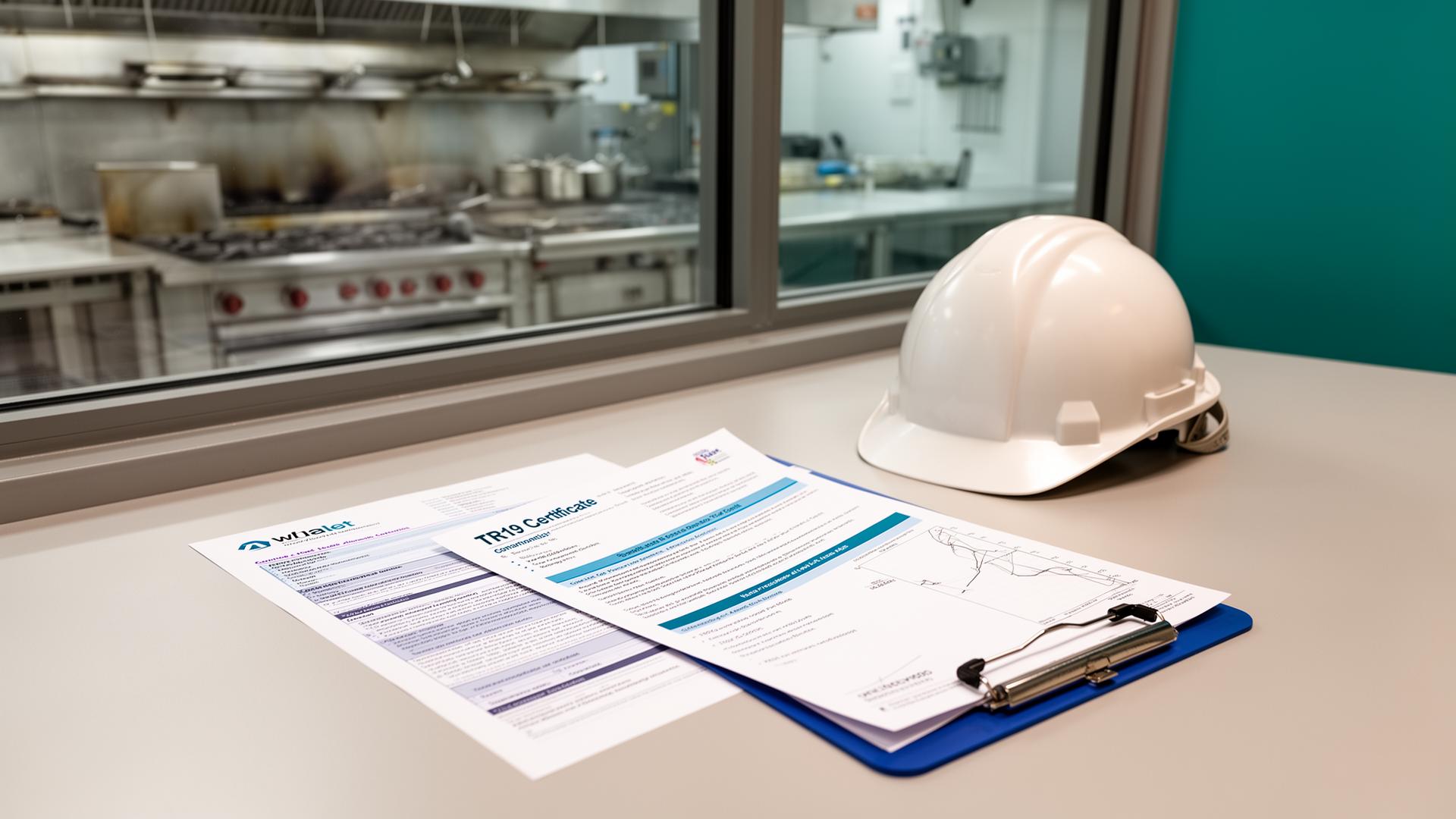
The connection between TR19 certificates and insurance is one of the most powerful arguments for regular kitchen extract cleaning — and one of the most underused sales tools available to contractors. Most building owners do not fully understand the insurance implications of failing to maintain their kitchen extract systems. When they do understand, the conversation shifts from "how much does cleaning cost?" to "what is the risk of not cleaning?"
This guide explains the insurance and fire safety implications of TR19 compliance, giving contractors the knowledge to have more effective conversations with clients.
Why Insurers Require TR19 Compliance
Commercial property insurance policies typically include conditions relating to fire prevention. Kitchen extract systems are specifically mentioned in many policies because they represent one of the highest fire risks in commercial premises.
Grease extract ductwork acts as a chimney. If a fire starts at the cooking appliance, the grease-laden ductwork provides a continuous fuel source that can carry fire through walls, ceilings, and floors to other parts of the building. A duct fire can spread to areas far from the kitchen before it is even detected.
Insurers know this. Their loss data shows that kitchen extract fires are a significant source of claims in the food service and hospitality sectors. Their response has been to make maintenance of these systems a condition of cover.
The specific requirements vary between policies, but common conditions include:
- Kitchen extract systems must be cleaned at intervals recommended by TR19
- Cleaning must be carried out by a competent contractor (increasingly defined as VHR-registered)
- Post-clean verification certificates must be obtained and retained
- The building owner must be able to produce certificates on request
What Happens When Insurance Is Invalidated
If a fire occurs and the insurer finds that the kitchen extract system was not properly maintained, the consequences can be severe:
Claim rejection — The insurer may reject the fire damage claim entirely, on the grounds that a condition of the policy was not met. The building owner bears the full cost of fire damage, which in commercial premises can be hundreds of thousands or millions of pounds.
Partial claim reduction — Some insurers may not reject the claim entirely but may reduce the payout, arguing that the building owner's negligence contributed to the severity of the fire.
Policy cancellation — The insurer may cancel the policy, leaving the building owner without cover and potentially unable to obtain affordable replacement cover from other insurers.
Premium increases — Even without a claim, if an insurer discovers during a routine inspection that extract cleaning has not been maintained, they may increase premiums or add specific exclusions to the policy.
The financial impact of insurance invalidation can dwarf the cost of regular cleaning. A quarterly cleaning contract for a typical restaurant might cost £1,200-£2,000 per year. A rejected fire claim could run into millions.
The Contractor's Liability
Contractors also have liability considerations:
Professional indemnity — If a contractor produces a TR19 certificate that later proves to be inaccurate — for example, certifying that a system was cleaned to standard when it was not — they may face a professional indemnity claim.
Public liability — If inadequate cleaning contributes to a fire that causes injury or property damage, the contractor's public liability insurance may be called upon.
Criminal liability — In extreme cases, if a fire causes death or serious injury and the investigation reveals that the cleaning contractor produced false or misleading documentation, criminal charges could follow.
These liability considerations make accurate, honest, comprehensive TR19 certification essential. The certificate protects the contractor as much as it protects the client.
What a Valid TR19 Certificate Proves to Insurers
A properly completed TR19 post-clean verification certificate provides insurers with several key pieces of evidence:
The system was cleaned — Basic but essential proof that maintenance was carried out.
When it was cleaned — The date establishes compliance with the cleaning frequency requirement.
By whom — Named operatives with qualifications demonstrates competence.
To what standard — Micron readings provide measurable evidence of the cleanliness achieved.
What was cleaned — The scope of work, including any areas that could not be cleaned and why.
Photographic evidence — Visual proof of the system's condition before and after cleaning.
The certificate is the complete package of evidence. A simple invoice showing that cleaning was carried out is not sufficient — insurers want to see the detailed report that proves the standard achieved.
How Often Certificates Are Requested
In practice, TR19 certificates are requested in several scenarios:
Annual insurance renewal — Some insurers ask for evidence of cleaning as part of the renewal process. Building owners who cannot produce current certificates may face increased premiums or conditions.
Following a fire — This is the most critical scenario. If a fire occurs involving the kitchen or extract system, the insurer will request all available maintenance records. The certificates become key evidence in the claims process.
Fire risk assessments — Fire risk assessors (required under the Regulatory Reform (Fire Safety) Order 2005) will ask to see TR19 certificates as part of their assessment. Missing or outdated certificates result in recommendations that become requirements for the building owner.
Insurance inspections — Some insurers conduct periodic inspections of insured premises. Kitchen extract maintenance records are a standard item on the inspection checklist.
Change of insurer — When a building owner changes insurance provider, the new insurer may request evidence of maintenance history as part of the underwriting process.
Environmental Health Officer Visits
Environmental Health Officers (EHOs) from the local authority may also request TR19 evidence during routine inspections of food premises. While EHOs are primarily concerned with food hygiene, they also have responsibilities relating to workplace safety and fire prevention.
A kitchen with a visibly dirty extract system may trigger concerns about fire safety and maintenance. Having current TR19 certificates available demonstrates that the system is being properly maintained.
EHO visits are typically unannounced, so certificates should be easily accessible — either on site or available through a digital system that can be accessed immediately.
Fire Safety Inspections and TR19 Requirements
Fire and Rescue Services have the power to inspect commercial premises under the Regulatory Reform (Fire Safety) Order 2005. During these inspections, they may:
- Examine the kitchen extract system
- Request evidence of regular cleaning
- Check that cleaning has been carried out at appropriate intervals
- Review the quality and completeness of TR19 certificates
If the Fire Service finds that extract cleaning has not been maintained, they can issue enforcement notices requiring the responsible person to take action. In serious cases, they can issue prohibition notices that prevent the premises from being used until the deficiency is rectified.
Keeping Certificates Accessible for Clients
One of the practical challenges with TR19 certificates is accessibility. Building owners and facilities managers need to be able to produce certificates quickly when requested by insurers, fire risk assessors, or inspectors.
Historically, certificates were paper documents filed on site. This creates problems:
- Paper gets lost, damaged, or misfiled
- Multiple sites mean multiple filing locations
- Access requires physically visiting the site or requesting the document
- Verifying the history requires searching through files
Digital certificate storage and client portals solve these problems. TR19Flow provides a client portal where building owners and facilities managers can log in and instantly access all their TR19 certificates, view upcoming renewal dates, and download reports. When an insurer or inspector requests evidence, the client can provide it within minutes rather than days.
This accessibility is itself a selling point for contractors. Offering clients a portal where they can access their certificates at any time differentiates you from competitors who deliver paper certificates that inevitably get lost.